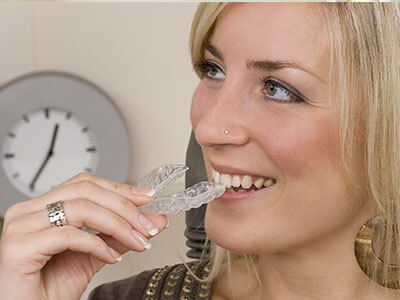
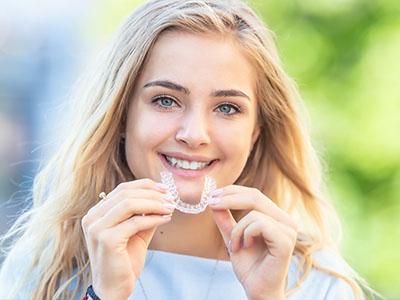
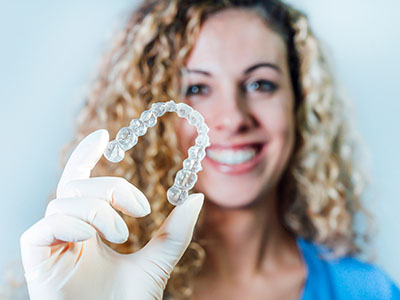
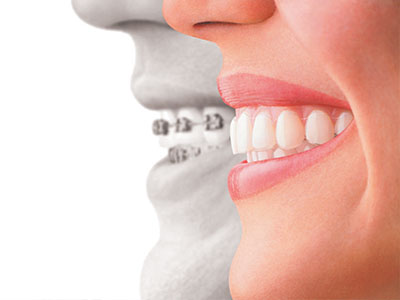
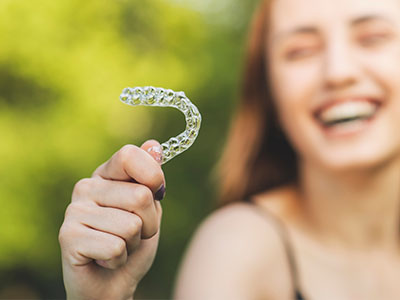
Clear aligner therapy has changed the way many people approach orthodontic care. Practically invisible and designed to fit into busy lives, Invisalign® offers a discreet path to straighter teeth without the look and feel of traditional braces. The system is engineered to address alignment and bite concerns while keeping daily routines — eating, speaking, and oral hygiene — largely uninterrupted.
Unlike one-size-fits-all approaches, modern clear aligner treatment relies on individualized planning and precise incremental movement. That combination allows clinicians to map a trajectory for each tooth and guide the smile toward a predictable result. For patients, the benefits are often a balance of comfort, convenience, and improved esthetics throughout treatment.
This page explains how Invisalign® works, what to expect during treatment, and how our clinical process supports predictable outcomes. The goal is to give you a clear, practical understanding so you can decide whether to explore a consultation with our team.

Invisalign® for Teens

Invisalign® for Brides

Invisalign® for Travelers

Before & After Photos

Invisalign® Videos

FAQs

Invisalign® vs Braces

Invisalign® vs Direct-To-Consumer Aligners

Is Invisalign® Right For Me?

Invisalign® Costs
Invisalign® works through a planned series of clear, removable aligners that apply mild, controlled forces to teeth. Each aligner represents a small step in the overall movement plan; you wear each set for the prescribed period, then switch to the next set as the treatment plan progresses. Over time, these small, consistent adjustments shift teeth into the desired positions.
The aligners are fabricated according to the exact specifications of the digital treatment plan. This allows for a sequence that targets tooth movement in a predictable order, combining rotation, translation, and minor vertical adjustments as needed. Because the system is planned in three dimensions, clinicians can visualize the entire treatment from start to finish.
Because aligners are removable, they offer a degree of flexibility not available with fixed appliances. Patients typically remove the trays briefly for meals and oral care, then put them back to maintain the prescribed wear time. That balance of control and convenience is a core reason many adults and teens prefer clear aligners.
Contemporary aligner treatment begins with detailed digital records. A rapid intraoral scan captures the three-dimensional shape of your teeth and bite, producing data that the clinician uses to analyze alignment and plan movements. This scan replaces traditional impressions in many practices, improving comfort and accuracy.
Using that digital model, your clinician designs a comprehensive treatment sequence. Specialized software simulates each stage, allowing a preview of how teeth are expected to shift over time. These simulations help set realistic expectations and enable precise fabrication of each aligner in the series.
Because the full treatment plan is visualized from the outset, clinicians can make strategic decisions about the order and type of movements. This foresight minimizes surprises and supports a more efficient path to the intended outcome. The technology also facilitates communication with patients, who can see the projected changes before treatment begins.
Aligners are designed to be comfortable and low-profile. Most patients report an adjustment period as teeth respond to the initial forces, but discomfort is generally brief and mild compared with traditional appliances. The smooth plastic surfaces reduce irritation to cheeks and lips, and custom fitting helps maintain comfort throughout treatment.
Oral hygiene remains straightforward because trays are removable. Brushing and flossing can continue as usual, and you don’t need to work around brackets and wires. Removing aligners for meals eliminates concerns about food getting trapped, and it makes maintaining a consistent hygiene routine simpler.
Adherence to wear time is important for predictable progress. Clinicians typically recommend daily wear for the majority of the day, removing aligners only for eating, drinking (except water), and oral care. Clear guidance and routine check-ins help patients stay on track and address questions as they arise.
Clear aligners are suitable for a wide range of alignment concerns, including mild to moderate crowding, spacing, and certain bite irregularities. Because the system focuses on controlled, incremental movement, it can address many common orthodontic objectives while preserving esthetics during treatment.
Some complex cases may require additional strategies — attachments, interproximal reduction, or auxiliary tooth movements — that your clinician can integrate into the plan. During the consultation, the dental team evaluates tooth position, jaw relationships, and functional needs to determine whether aligner therapy is an appropriate option.
Age is not an absolute barrier; both teens and adults have benefited from clear aligner approaches. The best way to know whether Invisalign® is a suitable choice is through a professional evaluation that considers dental health, treatment goals, and the level of patient commitment to the prescribed wear schedule.
Your initial visit begins with a clinical assessment and a clear conversation about goals and possibilities. We use a fast, precise digital scan to document tooth position and occlusion, then discuss the proposed movement strategy and what you can expect during each phase of care.
Once a treatment plan is confirmed, your custom aligners are fabricated and scheduled for delivery. Our team provides thorough instructions on insertion, removal, cleaning, and wear schedule so you can confidently manage day-to-day routines. Periodic follow-up appointments monitor progress and allow adjustments when necessary.
Throughout treatment, you’ll have access to clinical guidance and support from our staff. We focus on predictable, clinical outcomes while prioritizing your comfort and convenience, so the experience is efficient and well coordinated from start to finish.

During a consultation, your clinician evaluates alignment and discusses whether Invisalign® fits your goals. This appointment helps set expectations and outlines the next steps.

A precise digital scan forms the basis of your customized treatment plan. You can review the simulated progression and understand how each stage contributes to the final result.

Each tray is made to fit your teeth closely and to guide specified tooth movements. Comfort and predictable force application are central to the aligner design.

Regular check-ins help verify progress and allow the clinical team to make any necessary refinements to keep the treatment on course.
Short videos that explain how clear aligner treatment works and what patients can expect during different stages of care.
*Invisalign® is a registered trademark of Align Technology, Inc.
At Maplewood Dental Group, we combine up-to-date digital tools with evidence-informed clinical protocols to provide clear aligner care that is practical and patient-focused. If you’re curious whether Invisalign® is a fit for your smile goals, our team can evaluate your needs and walk you through the process.
To learn more or to schedule a consultation, please contact our office for additional information. We’re happy to answer questions and help you determine the best path forward for your smile.
Invisalign® uses a series of clear, removable aligners that are fabricated from a digital treatment plan to apply gentle, controlled forces to specific teeth. Each aligner represents a small incremental change, and patients switch to the next tray on a prescribed schedule to continue the planned progression. Because movement is planned in three dimensions, clinicians can sequence rotations, translations and vertical adjustments in a predictable order.
This method contrasts with fixed braces, which rely on brackets and wires to exert continuous force and are adjusted periodically by the clinician. Removability gives patients more control for eating and hygiene, while the digital planning process lets clinicians visualize expected outcomes before treatment begins. The combination of custom trays and detailed simulation supports a tailored approach to many common alignment issues.
Many teens and adults with mild to moderate crowding, spacing or bite irregularities can benefit from Invisalign® aligners, provided they are in generally good oral health. During a clinical evaluation the dental team assesses tooth position, jaw relationships, gum health and any restorative work to determine whether aligner therapy is appropriate. Commitment to wearing the trays as prescribed is also an important factor in candidacy.
Some more complex orthodontic issues may require adjunctive techniques such as attachments, interproximal reduction or staged movements that can be incorporated into an aligner plan. A professional consultation at Maplewood Dental Group will clarify whether Invisalign® is a suitable option and outline any additional measures needed for a predictable result. The best pathway is determined by combining clinical findings with the patient’s goals and lifestyle considerations.
Treatment time with Invisalign® varies depending on the complexity of the case and the number of movements required, but many patients complete active alignment within several months to roughly a year. The digital plan outlines the sequence and estimated timing, and periodic check-ins allow the clinician to confirm progress and make refinements if necessary. Adherence to the recommended wear schedule directly impacts how closely the actual timeline follows the plan.
Because each aligner produces a small, controlled change, predictable progress depends on consistent use and professional oversight. Some situations may require additional refinement trays or short extensions of treatment to achieve the intended outcome. Your clinician will discuss a personalized timeline during the consultation and update it as treatment progresses.
Clinicians typically recommend wearing Invisalign® aligners for about 20 to 22 hours per day to ensure efficient, predictable tooth movement. Aligners should be removed for eating, drinking anything other than water, and for brushing and flossing, then replaced immediately afterward to maintain the prescribed wear time. Skipping wear or frequently removing trays for extended periods can slow progress and affect the final result.
Maintaining a consistent routine helps the plastic trays apply the planned forces each day, and using a storage case when trays are out of the mouth reduces the risk of loss or damage. If you have questions about how to fit aligner wear into your daily schedule, the clinical team can offer practical tips and troubleshooting during follow-up visits. Regular monitoring also helps reinforce adherence and address any concerns early.
Some patients experience a brief adjustment period when they first begin wearing aligners, which can include a mild lisp or subtle changes in articulation that usually resolve within a few days. Because aligners fit closely against the teeth and have smooth edges, they generally cause less soft-tissue irritation than brackets and wires. Any soreness or pressure tends to be most noticeable when switching to a new aligner and typically subsides within a few days.
Comfort and speech adaptation improve as patients become accustomed to the trays, and clinicians can provide guidance on insertion and removal techniques to minimize strain. If persistent discomfort or significant speech issues occur, the dental team will evaluate fit and alignment and make any necessary adjustments. Routine follow-ups provide an opportunity to address comfort concerns promptly.
Proper aligner care preserves their clarity and helps maintain oral health; rinse trays with lukewarm water and brush them gently with a soft toothbrush and clear, fragrance-free soap as recommended by your clinician. Avoid hot water, which can warp the plastic, and steer clear of colored or abrasive cleaners that can damage or stain the trays. When trays are out of the mouth, keep them in their case to prevent loss and contamination.
Good oral hygiene is essential during treatment: brush twice daily, floss daily and continue routine dental cleanings to prevent decay and gum problems that could interrupt aligner therapy. Because aligners are removable, it is easier to keep teeth and gums clean than with fixed appliances, but it also requires diligence after meals and snacks. Your clinician will review a daily cleaning routine and any specific product recommendations at your appointments.
Attachments are small, tooth-colored composite bumps bonded to select teeth to give aligners a better grip and enable more complex movements such as rotations or vertical corrections. They act as anchor points so the tray can apply force in a controlled direction and are planned during the digital design phase when necessary. Attachments are removable at the completion of treatment and are designed to be minimally noticeable.
In some cases, clinicians may also use interproximal reduction (IPR) — the selective shaving of enamel between teeth — to create space for movement, or they may plan for elastic wear or other auxiliaries to address bite relationships. These options are discussed during the consultation and incorporated into the customized plan only when they improve the predictability of the outcome. Clear communication about these steps helps patients understand the rationale behind each component of care.
Digital planning begins with an intraoral scan that captures a three-dimensional model of your teeth and bite, replacing traditional impressions in many practices for greater comfort and accuracy. Specialized software simulates the sequential tooth movements and produces a visual preview of the projected result, which helps both clinician and patient set realistic expectations. This end-to-end visualization allows for strategic sequencing and the fabrication of aligners that match the planned trajectory.
Because the clinician can review the proposed plan before trays are made, they can modify the sequence or add auxiliaries to manage complex movements more effectively. The technology also facilitates clearer communication about treatment goals, potential limitations and anticipated timelines. Regular review of progress against the digital plan supports timely adjustments to keep care on course.
Retention is a critical phase after active alignment to prevent relapse; most patients transition to a retainer program that the clinician customizes based on the original concerns and the details of tooth movement. Retainers may be removable clear trays or fixed bonded wires, and the recommended wear schedule varies depending on the case and the clinician’s judgment. Consistent retainer use during the early months after treatment is essential to allow supporting tissues to adapt to the new tooth positions.
Long-term maintenance often includes nighttime retainer wear and periodic follow-up visits so the dental team can confirm stability and address any minor shifts early. Your clinician will outline a retention plan before completing treatment and explain how to care for retainers to maximize their longevity. Staying engaged with the practice for occasional checks helps protect your investment in the outcome.
Your consultation at Maplewood Dental Group begins with a comprehensive dental exam and a conversation about your smile goals, medical history and any concerns that might affect treatment. We use a fast intraoral scan to capture precise digital records and review a proposed movement strategy with visual simulations so you understand the anticipated progression. The meeting also covers practical aspects of wearing and caring for aligners and outlines the clinical steps involved in achieving the planned result.
Following the consultation, our team will provide clear instructions on next steps, scheduling and what to expect during active treatment and retention phases. We prioritize predictable outcomes and patient comfort through regular monitoring and open communication, so you can feel informed throughout the process. If you decide to proceed, the practice will coordinate fabrication and delivery of your custom aligners and support you at every stage of care.
Skilled, compassionate dental care for patients of all ages in Nashua, New Hampshire.